

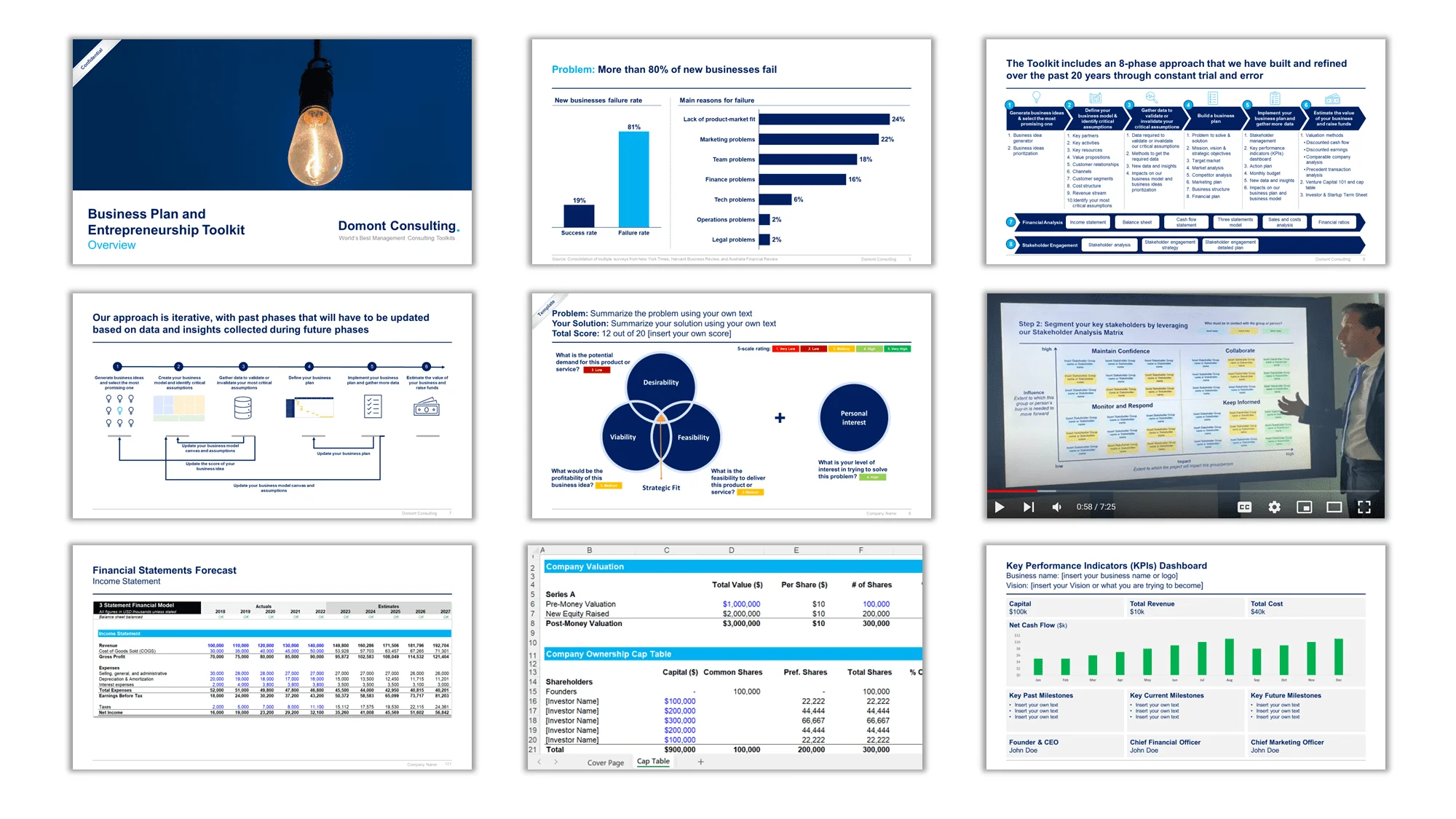


If you’re standing at the edge of launching your own business and losing sleep over that wagging to-do list, yep, business plan included, you’re definitely not alone. In the maze of templates, advisors, and wild entrepreneurial tips floating around the internet, Aurelien Domont Consulting shouts for your attention with its Business Plan and Entrepreneurship Toolkit. The real question, though: does this all-in-one toolkit genuinely help you build a killer business, or is it just another glossy PDF graveyard? Let’s break down what this toolkit really offers, how it stacks up for new founders, and whether it deserves a spot in your entrepreneurial arsenal.
One subtle but powerful add-on: there’s a private online community for toolkit users. Ask a question and you’ll get an answer (sometimes from Aurelien himself, if rumor serves).
What stands out? The Aurelien Domont toolkit scores with live support, regular updates, and a community vibe that others lack. The tradeoff is price, cheaper or even free alternatives exist, but with a thinner package or less guidance.
Key Takeaways
-
- The Aurelien Domont Consulting Business Plan and Entrepreneurship Toolkit offers interactive templates, financial models, and pitch deck guides designed for both beginners and experienced founders.
-
- Its standout features include coaching-style prompts, customizable financial spreadsheets, and access to a supportive community for real-time help.
-
- The toolkit bridges the gap between theoretical business advice and practical action, making the business plan process less overwhelming.
-
- While the upfront price is higher than some competitors, users benefit from regular updates, live support, and resources that cater to various startup needs.
-
- This toolkit is best suited for first-time founders, solo entrepreneurs, and small teams ready to invest in structured, hands-on business planning.
Product Overview and Key Features
So, what exactly is this business toolkit? Picture a Swiss Army Knife but for starting (or scaling) your own business. The Aurelien Domont Consulting toolkit is a downloadable package, think interactive templates, step-by-step guides, pitch decks, and financial modeling magic, all distilled from years of real client work. I first heard about it from a friend who swore it was his “startup secret weapon.” Curious (and honestly, a little skeptical), I dove in. Here’s what you’ll find:-
- Business Plan Templates: Fill-in-the-blanks structure, but with actual guidance, not just bullet points. (Drafting my first plan took less than three coffee refills – that’s saying something.)
-
- Financial Model Templates: Dynamic spreadsheets, already packed with formulas for forecasts, budgeting, and break-even analysis. Also compatible with Google Sheets or Excel, so no compatibility drama.
-
- Pitch Deck Toolkit: Designed for founders who’d rather face a shark than build investor slides. These decks spoon-feed you structure, stats, and copy suggestions.
-
- Entrepreneur Roadmap: Milestones, deadlines, and pro-tips plotted out, imagine a GPS for early-stage chaos.
-
- Bonus Resources: Checklists, market research sheets, sample contracts, and investor outreach scripts.
| Toolkit Module | Use Case | Standout Feature |
|---|---|---|
| Business Plan Template | Drafting your business blueprint | Coaching-style prompts & real examples |
| Financial Modeller | Crunching numbers & forecasts | Built-in formulas, customizable |
| Pitch Deck Builder | Preparing investor presentations | Copywriting support, modern design |
| Roadmap and Checklist | Time-management for startups | Preloaded milestones & reminders |
Evaluation Criteria
Alright, before we all get shiny object syndrome, let’s set up a fair way to judge this toolkit:-
- Ease of Use: Can a first-timer make sense of it, or do you need an MBA (or monocle)?
-
- Comprehensiveness: Does it cover all the bases or just scratch the surface?
-
- Customization: Are the templates cookie-cutter or can you actually make them fit your world?
-
- Real-World Value: Do people report real wins, or are they just humbled by a stack of PDFs again?
-
- Support and Community: Do you get left alone in the founder wilderness, or is help a click away?
Toolkit in Practice: User Experience and Effectiveness
I’ll be real, my first time opening the toolkit, I fully expected to cringe. Templates so often feel like legal forms with the soul of a tax return. But the Aurelien Domont set? Surprisingly inviting, especially with those side notes, like, “If you’re sweating over competition, skip to page 9 and breathe.” Getting Started-
- Setup: Download, open, go. There’s no bizarre login process or endless onboarding video. I had my first plan sketched out after a Saturday morning caffeine marathon (and I’m a champion procrastinator).
-
- Guidance: Each doc is peppered with cues, callouts like, “Add your ‘why’ here” or “Don’t forget: investors love clarity.” It’s like someone is gently nudging you past blank-page paralysis.
-
- Total Beginner: You’ll appreciate the fill-in-the-blanks approach. It doesn’t feel condescending, more like a mentor leaving sticky notes on every page.
-
- Experienced Builder: If you’re on your second/third venture, you’ll skip the 101 explanations and jump into the custom financial tables. Saves precious hours.
A User Story
Jenny, a newsletter subscriber from Austin, shared: “I was days away from scrapping my startup idea because the business plan overwhelmed me. The toolkit cut the task from ‘ugh’ to ‘actually fun.’ My investor demo ran smoother than expected, and I even nabbed a second meeting.” TL:DR? The toolkit bridges the gap between theoretical advice and getting sh*t done. It’s not magic, but it’s a powerful motivator to press send on that funding application.Strengths and Weaknesses
Let’s get honest: even the flashiest toolkit has its ups and downs. Here’s where Aurelien Domont’s offer shines, and stumbles. Strengths-
- Ultra-Practical: The templates are not theoretical. Developed from actual founder feedback, so the stuff you fill in matters to investors and partners.
-
- User Support: That invite-only community saves you from shouting into the social media void. Answers are helpful, and usually fast. (I tested out a stupidly specific LLC question, and got three thoughtful replies.)
-
- Credibility: Aurelien’s own background (ex-corporate strategist, now angel investor) filters into every worksheet. You’re not guessing what matters, you’re told.
-
- Regular Updates: I’ve seen at least two major refreshes in the last year, proof people are actively improving this thing.
-
- Upfront Price: At $249 (discount codes sometimes available if you sign up for the newsletter), it’s not cheap coffee money, especially for beginners bootstrapping on ramen.
-
- Overwhelm Factor: There’s a TON packed in. If you’re allergic to checklists or see templates as handcuffs not helpers, you may feel buried at first.
-
- Limited Industry Specificity: It serves a wide crowd. If your business is hyper-niche (like, say…a pet psychic/dog yoga hybrid), you’ll need to massage the templates a bit.
Evidence and Comparative Analysis
You want proof, not just hype, right? Here’s how Aurelien Domont’s toolkit stacks up against common competitors in the entrepreneurship resource ring:| Toolkit | Price | # of Templates | User Community | Update Frequency | Notable Perks |
|---|---|---|---|---|---|
| Aurelien Domont Consulting | $249 | 10+ | Yes | Quarterly | Personal coaching access possible |
| LivePlan by Palo Alto | $180/yr | 20+ | Limited | Annually | Good for SaaS & tech startups |
| Bizplan | $149/yr | 9 | None | Annual | Crowdfunding portal integration |
| SCORE (nonprofit) | Free | 5 | Yes | Sporadic | Great mentorship, less structure |
Quick Highlights from Real Users
-
- “The only template that made me feel confident presenting to angel investors.”
-
- “Community answered my panic question pre-launch, no bot replies.”
-
- “Cost made me hesitate, glad I invested after my first pitch success.”
Target Audience: Who Will Benefit Most?
Ask yourself: Is this toolkit the magic bullet for everyone? (Spoiler: nope, and any tool that claims that is probably full of it.) Best Fit For:-
- First-time founders who break out in hives seeing the words “pro forma.”
-
- Self-starters who want depth, not just a one-page cheat sheet.
-
- Solo entrepreneurs and small startup teams getting ready to approach investors
-
- Non-traditional founders, artists, makers, coaches, branching into business for the first time.
-
- Folks running highly technical or regulatory-heavy businesses (biotech, banking? You’ll need to adapt heavily.)
-
- Those who want a plug-and-play plan in 30 minutes. This is structured, yes, but you have to put in brain sweat.
-
- Budget hawks, $249 is real money, especially if you’re in “ramen entrepreneur” mode.
Final Verdict and Recommendation
So, should you hit buy or close the tab? If you’re cash-strapped or just toying with an idea, maybe dip your toes into free platforms like SCORE first. But if you’re truly serious about launching, chasing funding, or trying to look legit in front of future partners, the Aurelien Domont Consulting Business Plan and Entrepreneurship Toolkit is a solid investment. What won me over was how usable it was even when I was truly, deeply stuck (“I can’t even word my value prop, help.” days). Was it wholly transformative? No toolkit replaces sweat equity or your unique vision. But it did turn my blank-page panic into progress (with a few fewer gray hairs). Bottom Line: Is it worth the investment? If you want a toolkit that’s deep, community-backed, and pro-approved, absolutely. If you’re just poking around or hate templates, maybe not. (But trust me: if you go for it, set aside a weekend, hit the coffee hard, and work through the prompts, your future, business-savvy self will thank you.) Ready to get started? Take the plunge (or at least check out the free samples/Aurelien’s newsletter). Still on the fence? Leave a comment below or join the community for a sneak peek, sometimes the best business moves start with a good question.Frequently Asked Questions about the Aurelien Domont Consulting Toolkit
What does the Aurelien Domont Consulting Business Plan and Entrepreneurship Toolkit include?
The toolkit features interactive business plan templates, financial model spreadsheets, pitch deck builders, a startup roadmap with milestones, checklists, and access to a private online community. These resources are designed to guide founders through business planning, pitching, and growth with practical, real-world advice.Is the Aurelien Domont Consulting toolkit suitable for first-time entrepreneurs?
Yes, the toolkit provides step-by-step guidance, fill-in-the-blank templates, and coaching-style prompts that make it accessible and supportive for those launching their first business, helping to reduce overwhelm and accelerate progress.How does the Aurelien Domont Consulting toolkit compare to alternatives like LivePlan or SCORE?
Compared to competitors, the Aurelien Domont toolkit offers robust support, regular updates, and an engaged user community. While alternatives may be more budget-friendly or industry-specific, this toolkit stands out for its comprehensive resources and personalized support, especially for those seeking guidance beyond basic templates.Can I customize the templates in the Aurelien Domont toolkit for my unique business?
Absolutely. The toolkit’s templates are fully customizable, allowing you to tailor financial models, business plans, and pitch decks to fit your specific industry, goals, and branding, though highly technical or niche entrepreneurs may need to make additional adjustments.Is the Aurelien Domont Consulting toolkit worth the investment for bootstrapping founders?
For founders serious about securing investment or structuring a robust business plan, the toolkit’s depth, support, and ongoing updates offer significant value. However, those on a tight budget or working on highly specialized ventures might consider starting with free resources before investing.What’s the best way to get started with the Aurelien Domont Consulting toolkit?
Begin by downloading the toolkit and working through the business plan template using the included prompts. Engage with the online community for questions, and use the financial and pitch deck tools as you refine your business idea or prepare for funding pitches.Be the first to review “Aurelien Domont Consulting – Business Plan and Entrepreneurship Toolkit”
Related products
Sale!

Business Courses
Jason Derulo and Kathleen Cameron – Million Dollar Mentality
Original price was: $497.00.$40.00Current price is: $40.00.
Sale!

Business Courses
Original price was: $999.00.$15.00Current price is: $15.00.
Sale!

Business Courses
Original price was: $97.00.$20.00Current price is: $20.00.
Sale!

Business Courses
Original price was: $999.00.$40.00Current price is: $40.00.
Sale!

Business Courses
Original price was: $997.00.$40.00Current price is: $40.00.
Sale!

Business Courses
Original price was: $497.00.$30.00Current price is: $30.00.
Sale!

Business Courses
Original price was: $199.00.$20.00Current price is: $20.00.
Sale!

Business Courses
Original price was: $497.00.$25.00Current price is: $25.00.
Reviews
There are no reviews yet.